
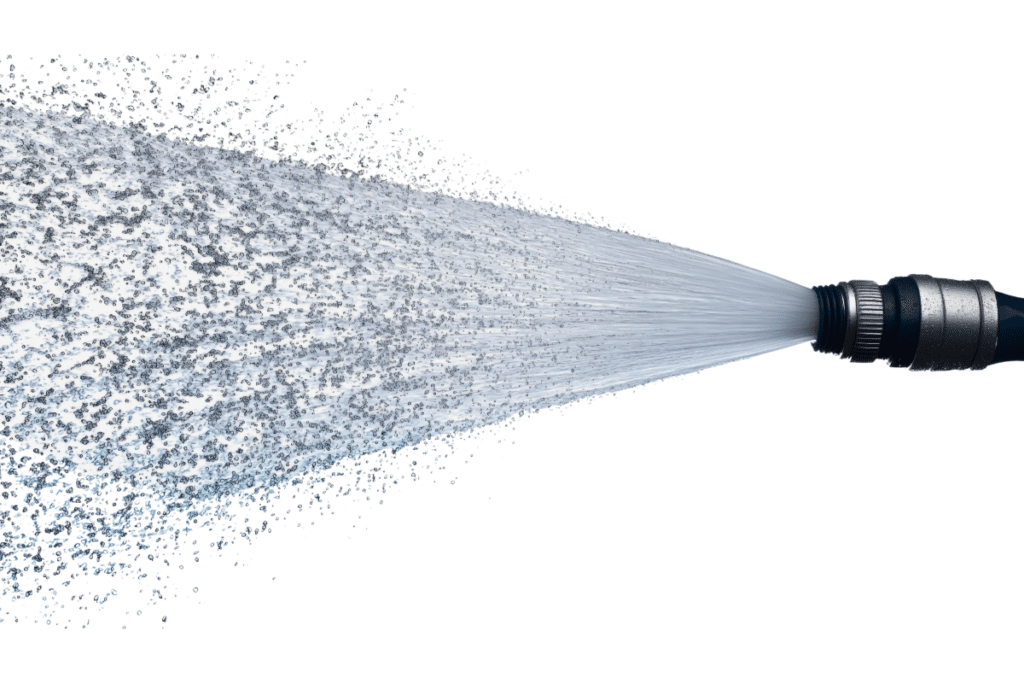
Weak water pressure is what most homeowners worry about, but the stronger the flow, the faster your plumbing is wearing out behind the scenes.
The thing about water pressure is that nobody complains when it feels strong. A shower that actually feels like a shower, a sprayer that can blast crusted pans clean, a garden hose that hits the back fence. Most folks assume more is better, full stop.
Here’s the uncomfortable truth though: plumbing has a safe operating range, and a whole lot of homes in the greater Fort Worth area are running well above it without anyone realizing. When the pressure stays elevated, you pay in slow, expensive ways.
What “too high” actually looks like
The sweet spot for residential water pressure is somewhere between 40 and 60 psi. Plumbing codes generally cap the upper end at 80 psi, and anything beyond that is officially putting your system under stress. It’s not unusual for municipal water mains in fast-growing North Texas suburbs to deliver water at pressures that comfortably exceed that threshold, especially in newer developments where the infrastructure is pushing hard to serve a lot of homes. Your shower might feel amazing, and your plumbing might be quietly paying the price.
How Texas heat makes it worse
Here’s something specific to this part of the country. Pipes expand and contract with temperature swings, and when you pair that movement with elevated pressure, fittings and joints fatigue faster than they would in a cooler, more stable climate.
The long summer we deal with means your plumbing is going through this cycle constantly. So a house that might happily tolerate 85 psi somewhere cooler, could start developing leaks a lot sooner in Keller or Southlake.
Signs you’re probably living with it right now
You might be experiencing the symptoms without recognizing them:
- A loud “thunk” or hammering noise when you turn off a sink or the washing machine
- Running toilets that won’t quit
- Faucets that still drip after you replaced the cartridge or washer
- Water heaters that fail well short of their expected lifespan
- Shower heads and aerators that clog or crack far too often
Any single item has other possible causes, but if two or three of these sound familiar, pressure is almost certainly your common denominator.
Why this matters for your wallet
High pressure isn’t just hard on your home, it’s hard on your monthly bill.
Every faucet and fixture in your home is engineered to deliver a certain flow at a certain pressure, and when the pressure is cranked up, they push more gallons through per use than they should. Multiply that across every shower, every dishwasher cycle, every time someone fills up a glass, and it adds up.
Then there’s the big-ticket damage. Your water heater is the most vulnerable appliance in the whole system. Elevated pressure stresses the tank walls and the temperature-and-pressure relief valve, which can dramatically cut its service life. If you’ve had to replace a water heater sooner than you expected, this is often why.
Howze handles water heater replacement all over North Texas and sees this pattern constantly.
The fix is straightforward
Testing your pressure takes about sixty seconds with a gauge from any hardware store. Screw it onto an outdoor hose bib, turn the water on, read the number. If you’re over 80, it’s time to act.
The solution is almost always a pressure reducing valve (PRV) installed on your main line where it enters the house. If you already have one and the pressure is still high, that valve has probably worn out, and they don’t last forever. Ten to fifteen years is a reasonable expectation before replacement.
Getting a new PRV sized, set, and sealed correctly is a job for a licensed plumber. A botched installation can leak, fail, or throw your whole system out of whack. Our team does these all the time, and we can handle any related plumbing repairs that pop up once we start looking at the bigger picture.
Don’t wait for the damage to show up
The sneaky part of high pressure is that you don’t know it’s been costing you until a pipe gives way, a water heater fails early, or a slow leak quietly ruins the sheetrock in a hallway. Every one of those things is more expensive to fix than the valve that would’ve prevented it!
Give us a call at 817-305-8600 or schedule service online, and we’ll get your home’s plumbing back to the right pressure. (No pressure!)